
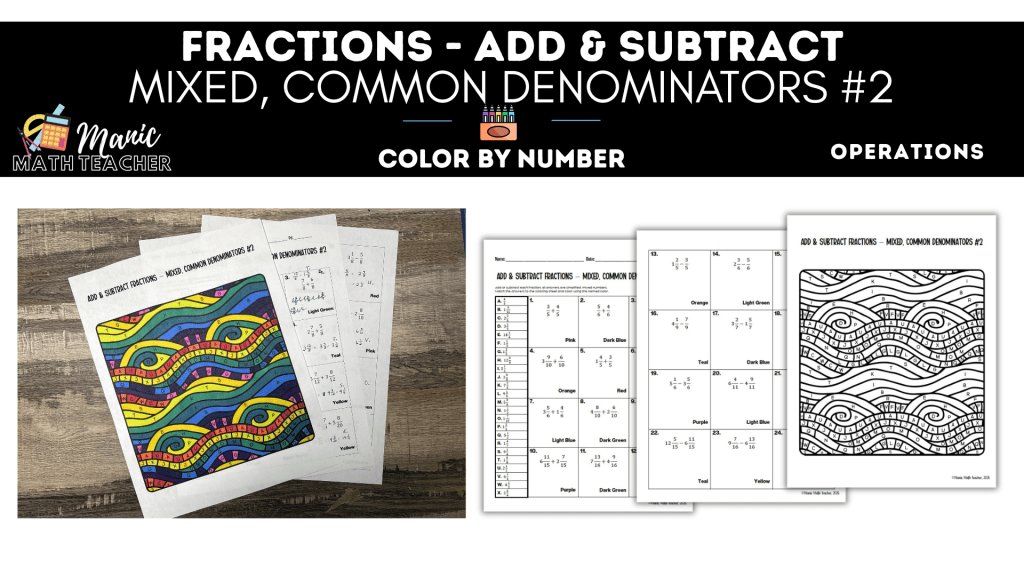
Moving from proper fractions to mixed numbers is a big conceptual leap. Students now have to juggle whole numbers and fractional parts at the same time, and it’s easy for one pieOnce students can add and subtract mixed numbers with common denominators, they’re ready for the next layer: dealing with results that come out as improper fractions and converting them back to mixed numbers. This is where their understanding of fraction magnitude really starts to solidify.
Research shows that students often struggle to interpret improper fractions; they can perform operations but don’t always grasp that an improper fraction is simply “more than one whole.” Giving them regular practice converting improper results to mixed numbers helps them connect symbolic notation to quantities they can picture.
In this level of practice:
- Problems feature mixed numbers with common denominators.
- Operations sometimes produce improper fractional parts.
- Students must convert those improper fractions to mixed numbers and combine them correctly with the whole number.
My color by number activity for this topic guides students through that process repeatedly. They add or subtract, recognize when the result is improper, convert to a mixed number, and check in the answer bank before coloring. This builds comfort with both forms and reinforces that mixed numbers and improper fractions are two ways of describing the same quantity.
This product can be found on my Teachers Pay Teachers Store here:


Leave a comment