
Moving from proper fractions to mixed numbers is a big conceptual leap. Students now have to juggle whole numbers and fractional parts at the same time, and it’s easy for one piece to get lost. That’s why practicing mixed numbers with common denominators is such an important intermediate step.
Pedagogically, it helps to keep denominators the same so students can focus on:
- How whole numbers and fractional parts interact.
- When to add or subtract whole numbers first, then adjust the fractions.
- What a mixed number actually represents on a number line.
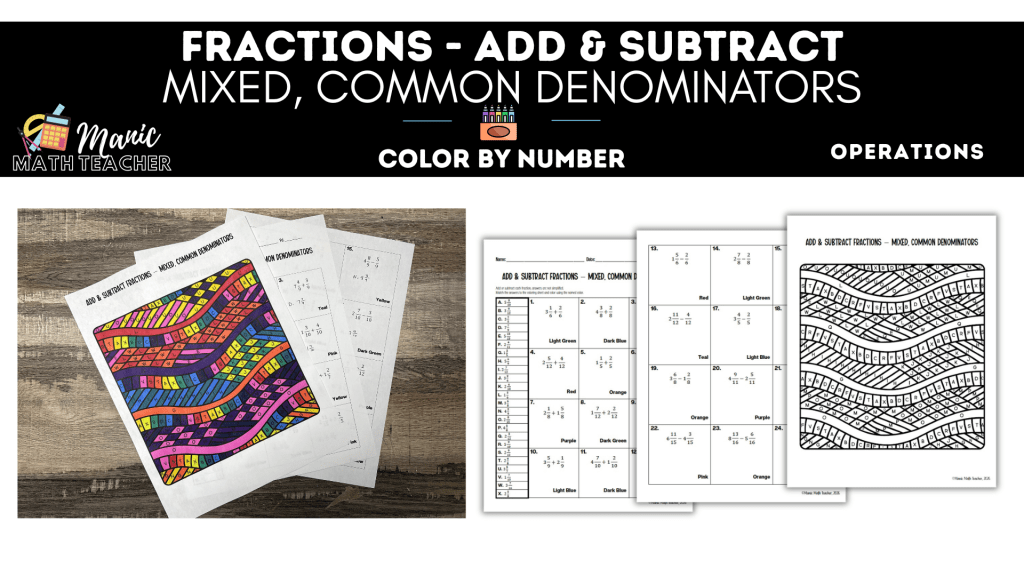
In my practice sets, students add and subtract mixed numbers that already share denominators, and answers are intentionally left as unsimplified mixed numbers. This lets them concentrate on the “structure” of mixed‑number operations—combining wholes and parts—before layering on simplification later.
The color by number format keeps them engaged: each mixed‑number answer flows into the answer bank, and correct work gradually reveals a design. It’s a gentle way to bridge from “just fractions” to mixed numbers without overwhelming them with too many new ideas at once.
This product can be found on my Teachers Pay Teachers Store here:


Leave a comment