
Many students can handle Pythagorean problems when everything looks exactly like the example in their notes. The trouble comes when they see different combinations of known and unknown sides. That flexibility—recognizing which side is missing and how to set up the equation—is what actually prepares them for high‑stakes assessments and real‑world problems.
Research on transfer in mathematics emphasizes varied practice: giving students multiple forms of the same underlying structure. When we intentionally mix problems where sometimes the hypotenuse is missing and sometimes a leg is missing, students are forced to slow down, identify the longest side, and think about the relationship rather than blindly applying a pattern.
To support that, I like to give a set of problems where students are told: “Sometimes you’re finding the hypotenuse. Sometimes you’re finding a leg. Your job is to decide which one each time.” This encourages them to label sides, compare lengths, and choose the correct operation.
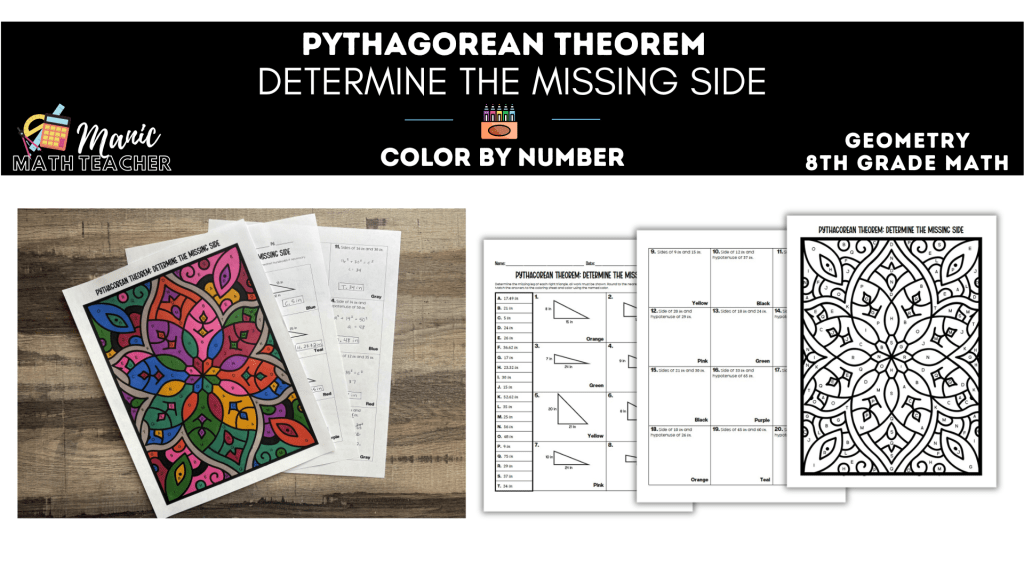
A color by number activity is a simple way to structure this. Each problem leads to a different answer in the bank, and the completed design only appears if they’ve been careful with which side they’re solving for. That extra layer of accountability can be powerful.
If your students mix up when to add and when to subtract in Pythagorean problems, a mixed missing‑sides practice set like the one I use—and offer on TpT—can be a helpful bridge.
This product can be found on my Teachers Pay Teachers Store here:


Leave a comment