
The distance formula is one of those topics that can quickly become a plug‑and‑chug exercise. But if we want students to really understand it, we need to balance repetition with meaning. The underlying idea—measuring how far apart two points are—is intuitive. The challenge is keeping track of coordinates and avoiding careless mistakes.
Research on fluency practice suggests that students benefit from repeated exposure to a skill in varied but predictable formats. Working through many pairs of points, with clear structure and built‑in feedback, helps them develop accuracy and speed.
I like to create sets of ordered pairs where students:
- Identify which coordinates belong together.
- Compute horizontal and vertical differences.
- Use the distance formula or Pythagorean reasoning to find the final distance.
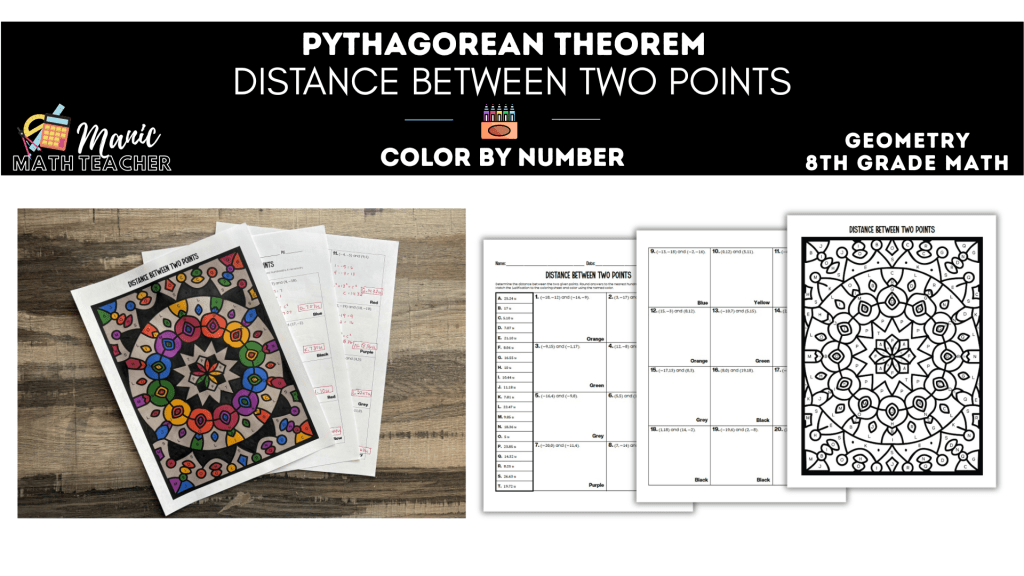
To keep this engaging, I wrap it in a color by number format. Students match their distances to an answer bank; if their value isn’t there, it’s a cue to check for sign errors or mis‑paired coordinates. The gradual appearance of a design keeps them invested in finishing all the problems.
If your students need extra practice with distance between two points, a structured activity like my distance color by number worksheet on TpT can give them that practice without turning class into another worksheet slog.
This product can be found on my Teachers Pay Teachers Store here:


Leave a comment